
Elementary Studio
Where learners begin to take ownership.
Elementary is a close-knit, learner-driven studio where children build strong academic skills while learning to manage themselves, work with others, and take responsibility for their choices.
Real Ownership, With Structure Around It
Elementary learners are old enough to take real ownership, but still young enough to need structure, coaching, and support. The studio is designed around that balance.
I can manage myself.
Learners take more responsibility for their time, work, goals, and choices.
I can contribute.
Being part of a community means helping, leading, listening, and making the studio better for everyone.
I can learn from mistakes.
Mistakes aren't something to avoid. They're part of learning, growing, and becoming more capable.
Guides…
- Set clear expectations
- Introduce lessons and tools
- Ask questions instead of handing out answers
- Help learners reflect on their choices
Learners…
- Set their own goals
- Decide how to use their work time
- Ask for help when they need it
- Take responsibility when they fall short
The goal isn't instant independence. It's practicing it every day.
Where does Elementary fit in the Acton journey?
Ownership isn't handed to a child on their first day. It's built, one stage at a time:
Spark (ages 4–7): I love learning. I belong. I am capable.
Elementary (ages 8–11): I can manage myself. I can contribute. I can learn from mistakes.
Middle School (ages 12–15): I can take on difficult challenges. I can communicate. I can test myself in the real world.
Launchpad (ages 16–18, coming 2027): I know myself. I can lead myself. I can create value.
Elementary learners are still children. They still need support, and they'll still make mistakes. But little by little, they take ownership of their choices, their work, their relationships, and their learning. That prepares them for Middle School, where the challenges get bigger.
Strong Skills, at the Level That Fits
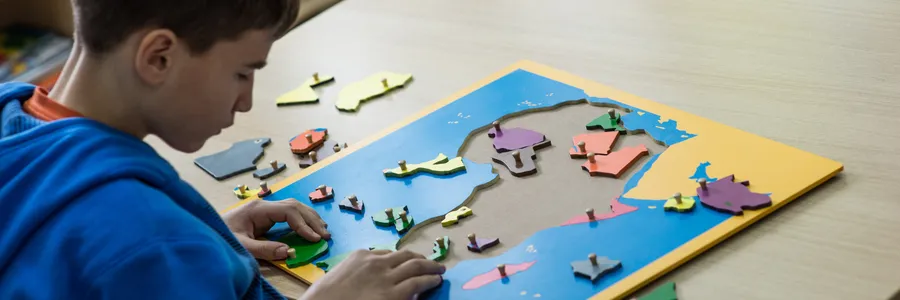
Every morning starts with a long, focused work cycle on core academics. Learners aren't expected to work on identical material just because they're the same age.
Morning work covers
Learners work with carefully sequenced, hands-on materials that make ideas concrete, then practice, repeat, and ask questions until they understand. After lunch comes DEAR (Drop Everything and Read): independent reading time with books learners choose.
Find the starting point.
Guides use observation, diagnostics, and daily work to see where each learner is.
Lessons and practice.
Guides introduce new work when a learner is ready. Learners practice until it clicks.
Show mastery, then move on.
Learners move forward by demonstrating understanding, not because a set amount of time has passed.
That lets children be challenged without being rushed, and supported without being held back.
What if my child is behind, or ahead?
Learners progress at their own pace, with support and accountability. There's no "behind," but there are clear expectations for effort, growth, and meaningful work. A learner who is ready for more can move ahead as fast as they're ready. There's no ceiling.
Is there a set curriculum?
Yes. It's choice-based, self-paced, and mastery-driven rather than lecture-driven. Learners work toward clear academic goals and mastery expectations.
Does Elementary use Montessori?
Elementary mornings use a lot of Montessori, along with other hands-on materials: sequenced work, with lessons introduced when a learner is ready. The rest of the day adds Quests and Socratic discussion.
Projects, Big Questions, and a Real Audience
Afternoons are for Quests: five-week, hands-on projects that end with an exhibition for families. Socratic discussions run through the whole day.
Quest → Discussion → Exhibition
Quests
Step into the shoes of people who did the work.
Read more
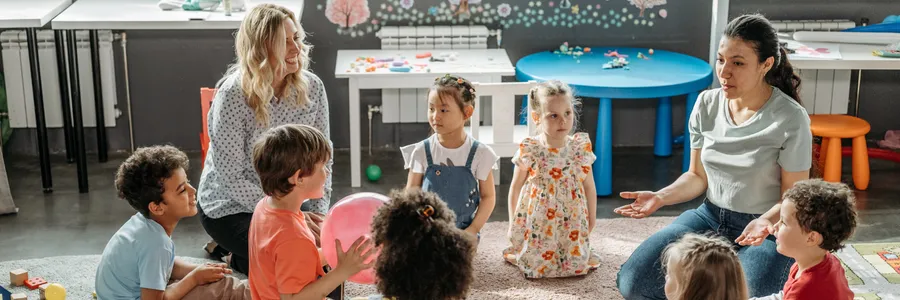
At Acton, we call these projects Quests. Each one runs five weeks. Instead of only reading about scientists, entrepreneurs, inventors, historians, or leaders, learners take on challenges like the ones those people faced. They may build, design, research, experiment, start a business, solve a real-world problem, or explore science and history. Quests ask learners to think, create, work together, and do something with what they know.

Socratic Discussions
Learning to reason, not to repeat.
Read more
Instead of being told what to think, learners work through questions, stories, dilemmas, and real-world problems. They practice forming an opinion, explaining why they believe it, listening carefully, questioning ideas, and changing their mind when they hear a stronger argument. The goal isn't one correct opinion. It's thoughtful people who can reason, listen, and decide for themselves.
Exhibitions
Families come in. Learners stand behind their work.
Read more
At the end of many Quests, families are invited into the studio. Learners may present projects, demonstrate what they built, explain what they learned, perform, run an event, or defend their work. Knowing a real audience is coming changes the work: learners aren't finishing something just because an adult assigned it. That builds confidence, communication skills, and pride in high-quality work.
Curious whether this kind of learning would fit your child?
Tell us a little about your family.
A Community, Not Just a Classroom
Elementary learners help shape the culture of their studio. They have a real voice, and with that voice comes responsibility.
Learners work alongside peers every day. They collaborate on Quests, solve disagreements, give and receive feedback, help maintain the studio, and learn how their choices affect the people around them. These skills matter just as much as reading, writing, and math.

Shared promises
Studio agreements where learners commit to effort, respect, kindness, and responsibility.
Squads
Small groups for collaboration, check-ins, challenges, and support.
Running Partners
Classmates who meet regularly to set goals and hold each other accountable.
Every day, learners practice:
How is discipline handled?
Through natural consequences, accountability systems, and peer feedback. When studio agreements are broken (for example disrespect, disruption, unkindness, or unsafe actions), a clear strike system helps protect the studio's culture.
Freedom Is Earned. Mistakes Are Expected.
In Elementary, freedom is connected to responsibility. Learners begin to see that the choices they make today affect what they're able to do tomorrow.
Excellent
Sometimes the work is excellent.
Not Yet
The work isn't finished, or the skill isn't mastered yet. It doesn't mean they can't get there.
We don't expect learners to get everything right the first time. A hard math concept, a piece of writing, a Quest challenge, a disagreement with a friend, or a missed goal can all become a chance to grow. Learners reflect, revise, ask for feedback, make a new plan, and try again.
What a Day in Elementary Looks Like
Each day is broken into work sprints with a shared purpose or goal. The schedule is flexible: learners can rearrange work blocks and choose from different work options based on their goals and commitments.
Morning
Afternoon
No nightly homework
Learners work hard during the day and still have time for family, friends, sports, and interests.
Outside and moving
Our outdoor space gives learners room to move and play, and physical activity is built into the week through games and challenges.
Beyond the studio
Field trips, guest presenters, outdoor experiences, and entrepreneurship take learning past the studio walls.
Drop-off and pickup
Drop-off is 8:30–8:45 AM. Pickup is 3:15–3:30 PM. Lunch comes from home.
No Letter Grades. Plenty of Evidence.
Learner ownership doesn't mean parents are left in the dark. Progress is mastery-based, and you'll see it in several ways throughout the year.
Badges and badge plan
A roadmap of what your child is working toward, and the skills needed to reach the next level.
Journey Tracker
The visual tool learners use to track badges, core skills, and personal goals.
Mastery checks and portfolio
Learners show what they know before moving on, and their work builds a portfolio over time.
Exhibitions
At the end of many Quests, you see the work in person and hear your child explain it.
Guide updates and journey meetings
Guides share progress, wins, areas for growth, and next steps, and parents attend journey meetings.
Guides who coach instead of control.
Adults at Acton are called Guides. They introduce lessons, explain tools, give feedback, track progress, and step in when learners need support. But they don't try to be a child's permanent source of answers. They ask questions like these instead, and over time, learners start asking them of themselves.
Want to talk through how your child would be supported?
Tell us about your family.
Questions Elementary Parents Ask
Straight answers to what we hear most, especially from families coming from a traditional school. If yours isn't here, ask us.
Prefer to talk? Call 724-201-3655.
Are there grades?
No letter grades. Progress is mastery-based and tracked through badges, mastery checks, portfolio evidence, exhibitions, and regular updates from Guides. See How parents see progress above.
Is there homework?
No traditional nightly homework. Learning happens in the studio, so home is family time.
My child is coming from a traditional school. How does the switch work?
Guides start by finding where your child is in each skill, through observation, diagnostics, and daily work, and build from there.
Does Acton serve children with learning differences?
Yes, in some cases. Every child is different, and we look at whether our environment can realistically support each learner well.
Our Guides are not special education specialists, so Acton may not be the right fit for a child who requires intensive, individualized, or specialized support throughout the school day.
We have had learners with dyslexia and other learning differences thrive at Acton, especially when they have the right support outside of school.
If your child learns differently, we encourage you to tell us early in the admissions process. We would rather have an open conversation about their needs and honestly determine whether Acton Pittsburgh is a good fit.
Are ages mixed?
Yes. Learners of different ages work together within the studio rather than being split up only by age, alongside their individual work.
Can I visit during the day?
Parents visit during tours and exhibitions, and during short, scheduled studio viewing windows. We don't do casual drop-ins, because learners deserve trust, not an audience.
What's the school calendar?
We start in early September and finish at the end of May, and our calendar follows public school holidays and breaks closely. Drop-off is 8:30–8:45 AM and pickup is 3:15–3:30 PM.
What does Elementary cost?
Annual tuition is $11,500. Our scholarship program offers up to $6,000 off tuition for eligible students; scholarships are limited and based on eligibility and availability.
Could Elementary Be Right for Your Child?
Elementary asks children to take on real responsibility, with a lot of support. Here's an honest look at who tends to thrive, and when it might not fit.
May be a good fit for a child who…
- Is ready to start managing their own time and goals, with coaching
- Learns well with hands-on materials and real books
- Would benefit from moving at their own pace, ahead or with more time
- Enjoys projects, building, and presenting their work
- Is learning to work through disagreements and mistakes
- Wants a voice in how their community runs
- Would do well with a full, focused school day and evenings free of homework
May not be the right fit for a family who wants…
- Letter grades and report cards
- A teacher directing every part of the day
- Nightly homework
That's okay. We'd rather say so up front.

See If Acton Is Right for Your Family
Acton is different from a traditional school, and we know it won't be the right fit for every learner or every family. Tell us a little about your child and what you're looking for. We personally review every inquiry and will reach out to learn more.
Contact Us
Acton Academy Pittsburgh, 3500 Brooktree Road Wexford, PA 15090 USA


Acton Academy Pittsburgh © 2026
