
Ages 4–7
Spark Studio
Where a love of learning begins. Spark is a joyful, hands-on environment where young learners build confidence, independence, curiosity, and a strong academic foundation.
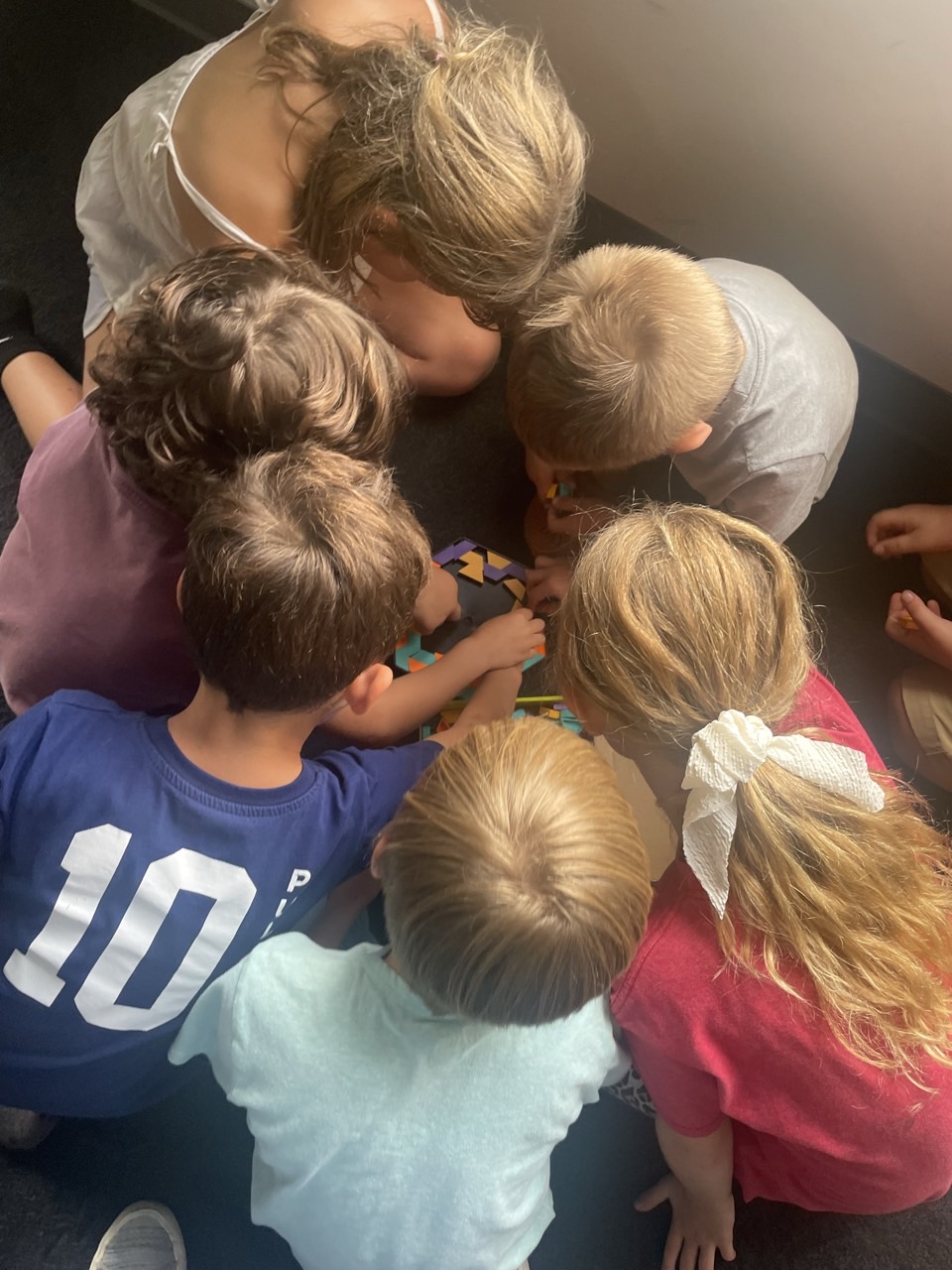
I love learning.
Learning should spark curiosity, feel meaningful, and leave children wanting to discover more.
I belong.
Every learner should know they are known, valued, and an important part of their community.
I am capable.
Children build confidence by doing meaningful things for themselves.

A Different Kind of Early Learning Experience
Young children are naturally curious. They want to move, explore, build, ask questions, and figure things out for themselves.
Spark is designed around that curiosity.
Guides prepare a rich environment, introduce new lessons, and give learners room to practice, make choices, struggle, ask for help, and try again.
Spark is also a mixed-age studio. Younger learners learn by watching and working alongside older peers, while older learners have opportunities to lead, help, and strengthen their own understanding.
Rather than constantly comparing children to others their exact age, we focus on helping each learner continue moving forward from where they are.
I can do hard things for myself.
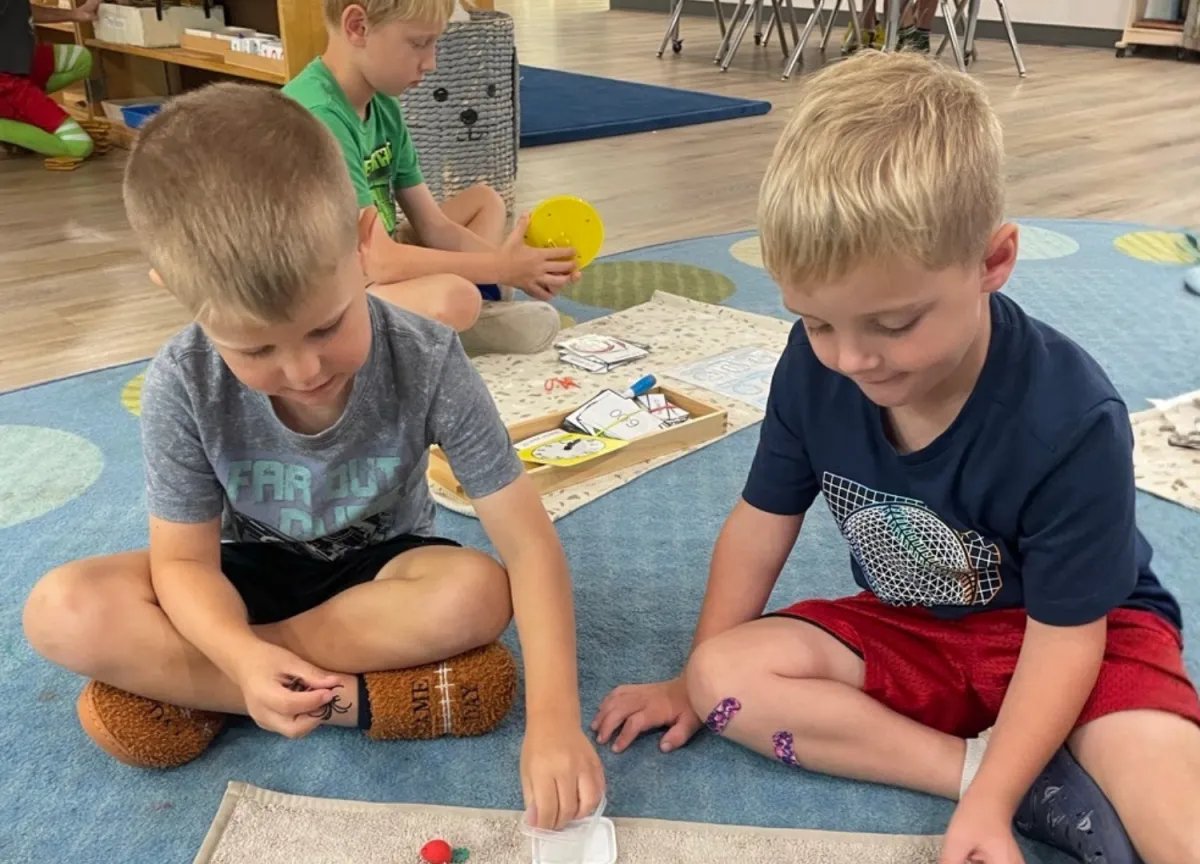
Montessori Mornings
Each morning, Spark learners take part in an uninterrupted Montessori work cycle focused on foundational academic skills.
Guides give individual and small-group lessons in reading, writing, handwriting, math, practical life, science, and cultural studies. Learners then practice with carefully sequenced, hands-on materials.
Not every five-year-old needs the same lesson on the same day.
Guides observe each learner closely, introduce new work when they are ready, and check for understanding before moving forward.
The goal is simple: challenge learners without rushing them and support them without making them dependent on an adult for every next step.
Core academic work in Spark is screen-free. Learners work with their hands, move through their environment, communicate with others, and build a concrete understanding of what they are learning.

Hands-on material
Learning through doing and exploring.

Individual progress
Lessons introduced when learners are ready.

Uninterrupted work time
Time to focus, practice, and discover.
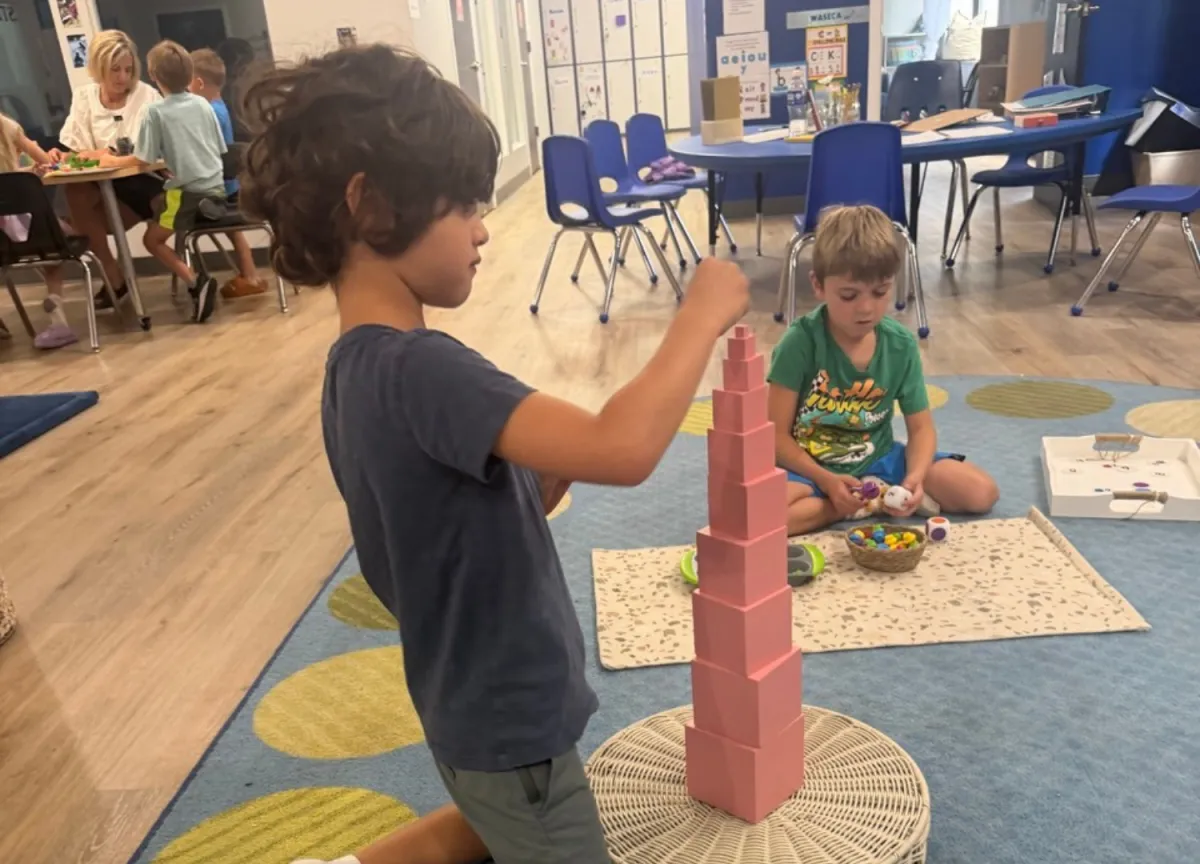
Learning More Than Academics
Reading and math matter.
So does learning what to do when something is hard.
Throughout the day, Spark learners practice making responsible choices, being a good friend, caring for their environment, working through frustration, resolving disagreements, asking for help, following through, and trying again after mistakes.
These moments may seem small, but they are where independence and character are built.
We want children to leave Spark with more than academic skills.
We want them beginning to believe that they can solve problems, contribute to a community, care for others, and take responsibility for themselves.
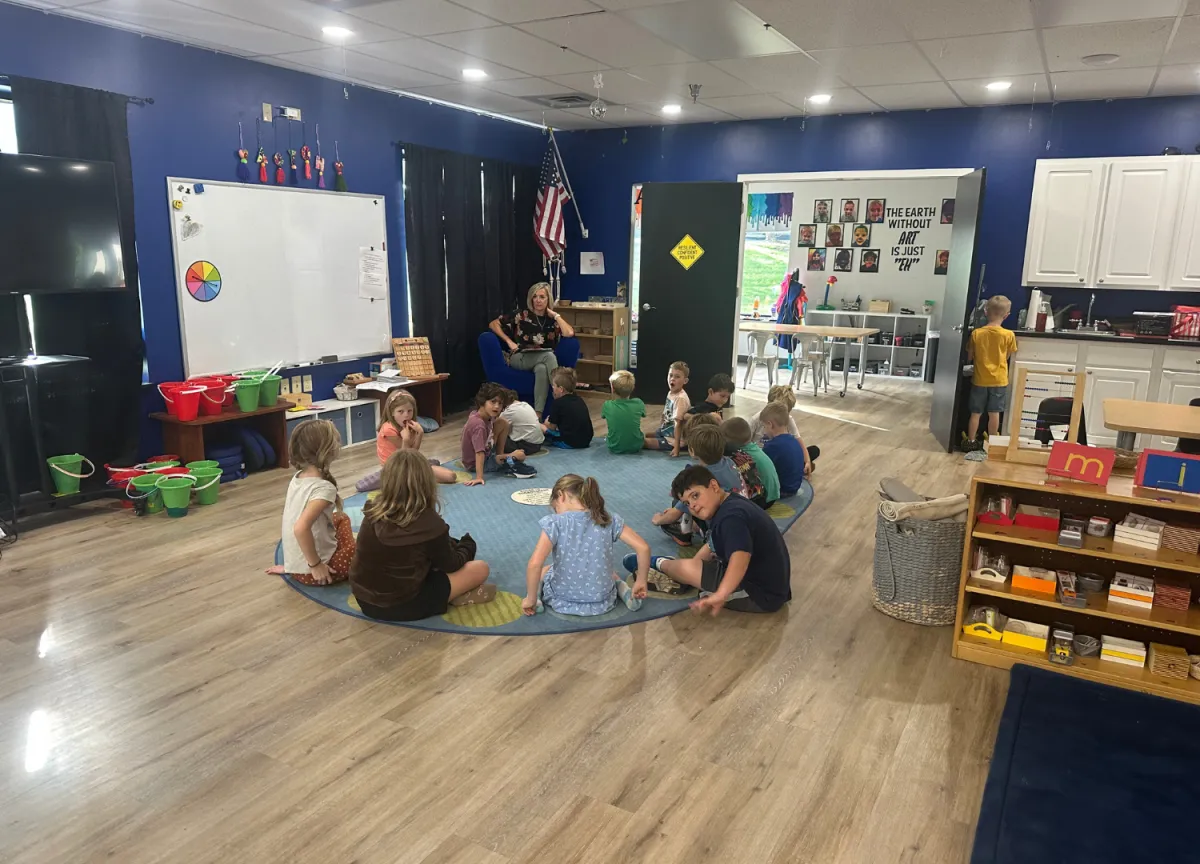
Socratic Discussions
Even young learners are capable of thinking deeply.
Spark learners participate in age-appropriate Socratic discussions where Guides ask questions instead of immediately giving answers.
Learners practice listening, sharing ideas, explaining their thinking, and hearing different perspectives.
The goal is not to tell learners what to think.
The goal is to help them learn how to think.
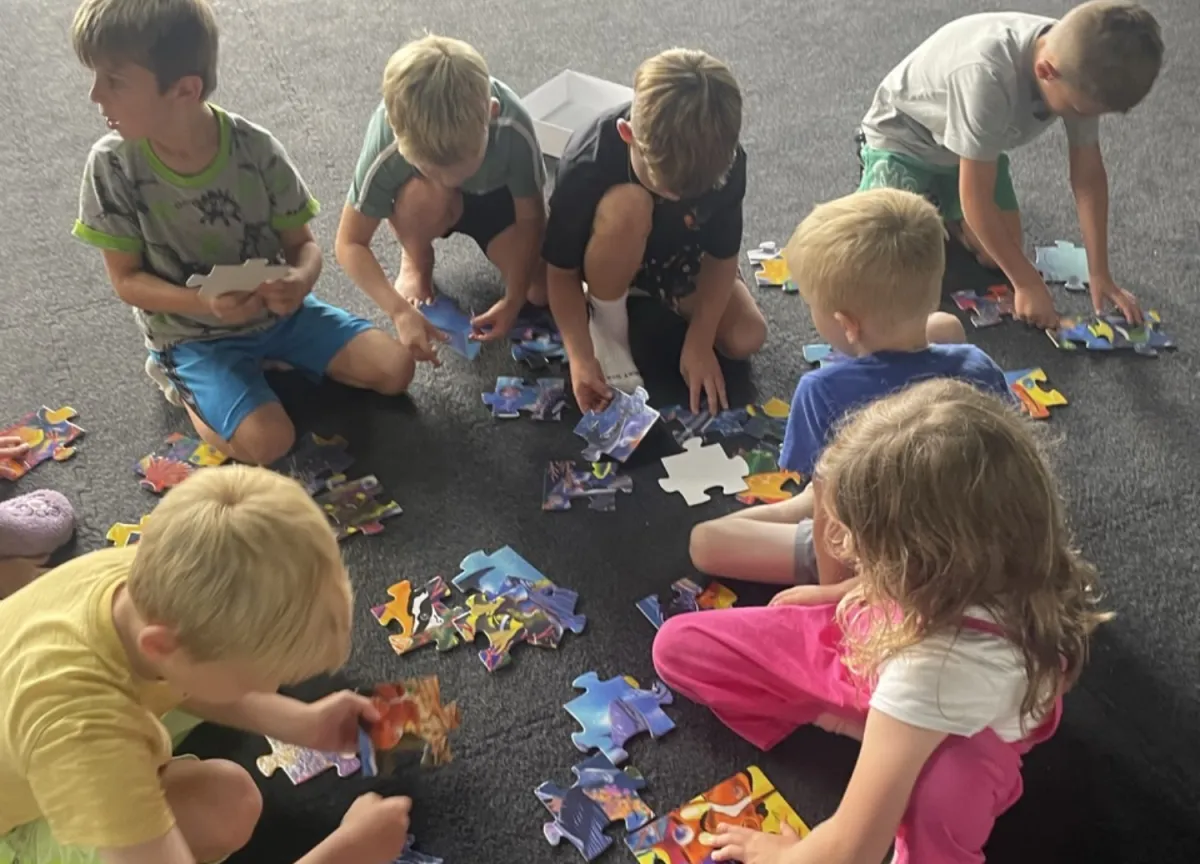
5 Week Hands On Projects and Challenges
At Acton, we call these Quests.
Each Quest lasts about five weeks and gives learners opportunities to build, create, experiment, solve problems, and explore the world around them.
Spark Quests may include topics like science, nature, art, building, entrepreneurship, and other real world challenges.
Learners are encouraged to try ideas, make mistakes, adjust, and keep going.
The focus is not only on the final product.
It is on curiosity, effort, problem solving, creativity, and learning through experience.
For Our Youngest Learners, Play Is Part of Learning
We do not see play as separate from learning.
Through play, children practice creativity, communication, negotiation, leadership, problem solving, and friendship.
“Sometimes the most important learning happening in the room looks like two children figuring something out together.
Young children need time to move, create, imagine, and play.
Art
Opportunities to draw, paint, create, and express ideas.
Building
Blocks, materials, and challenges that encourage creativity and problem solving.

Outdoor play
Time to move, explore, play games, and enjoy being outside.
Imaginative play
Space to pretend, create stories, take on roles, and use imagination.

Movement
Opportunities to run, climb, dance, stretch, and build coordination.
Time with friends
Time to talk, laugh, collaborate, work through disagreements, and build friendships.

Adults Who Know Your Child
Adults at Acton are called Guides.
Their job is not simply to stand at the front of the room and deliver information.
Guides observe, ask questions, introduce new lessons, encourage, redirect, and help learners work through challenges.
They get to know each learner well enough to understand when they need support and when they need space to figure something out for themselves.
Parents also receive regular updates about progress, wins, areas for growth, and next steps.
Do You Want Your Child To Feel Like Life Is An Endless Stream Of Opportunities?
Daily Schedule
Each day is broken up into work sprints with a shared purpose or goal.
8:30 Drop-off / Free Time
8:50 Daily Launch (Socratic Discussion)
9:05 Montessori Work Cycle
Screen-free: goal setting, math, reading, spelling, and Montessori work.
11:30 Lunch / Free Time
1:00 Spark Play
Team-based challenges, music, gym, manipulatives, dramatic play, and outdoor time.
2:00 Quest
Five-week-long hands-on challenges that close with a public exhibition to showcase their work to parents.
2:45 Studio Maintenance
3:00 Closing Group (Socratic Discussion)
03:15 Pick-up
The Beginning of the Acton Journey
Spark is the beginning of a much larger journey.
At this age, the goal is not just to build academic skills. It is to help children develop confidence, independence, curiosity, and a strong sense that they are capable.
As learners grow through Acton, they are given increasing levels of freedom, ownership, and responsibility.
Spark builds the foundation for that journey by helping young learners become more confident, more independent, and more willing to take on challenges for themselves.
Those early habits prepare them for Elementary Studio and everything that comes after it.
Could Spark Be the Right Fit for Your Child?
Spark may be a good fit for families looking for a place where their child can build independence, develop a genuine love of learning, and grow academically at their own pace.
Learners work with hands on materials, spend their core academic time screen free, learn how to work with others, and still have meaningful time to play and create.
The best way to learn more is to start a conversation with us.
Contact Us
Acton Academy Pittsburgh, 3500 Brooktree Road Wexford, PA 15090 USA


Acton Academy Pittsburgh © 2026
